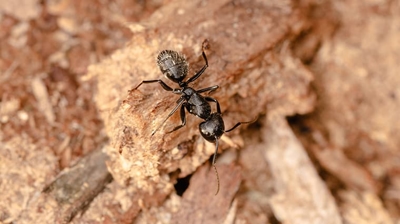
Termites
What Are Termites?
Termites live together in social colonies that are divided into three different castes or groups in order to maintain their colony. Termite castes include workers, soldiers, and reproductives (kings and queens). Termites feed on cellulose, primarily in the form of wood, though they also feed on soil, excrement, and decaying leaves and grass. While they are mainly viewed as destructive pests, termites are valuable to the global ecosystem, helping to break down dead or decaying wood and other organic matter. However, it can’t be argued that when termites find their way into homes and other buildings, they turn from helpful to invasive and destructive.
Are Termites Dangerous?
Termites are dangerous pests. Though they pose no direct danger to northern New Jersey residents, they are responsible for extensive and costly structural damage. Termites are responsible for causing more than 5 billion dollars in damage across the country each year. Termite damage isn’t typically covered by homeowners’ insurance, as their damage is generally viewed as preventable. Termites enter homes "silently" and can work for months, or even years, without detection. They work on the inside of the wood they have invaded, leaving the outside looking "normal." More times than not, a termite infestation isn’t discovered until their damage is extensive.
Why Do I Have a Termite Problem?
Termites will make themselves at home on any property that provides them with an environment suitable for nesting and feeding (decaying plant matter). Once established on your property, they will most likely find their way inside your home while foraging for food sources. Workers accidentally find their way into homes through cracks in the foundation or through wood-to-soil contact, such as with door frames, deck posts, wood shingles, and porch steps. Termites nesting directly on your property or on neighboring properties have the potential to invade and damage your home.
Common Areas to Find Termites
Termites travel from their food source to their nest through underground tunnels or mud tubes that they create on the surface of basement walls, foundations, and the ground. Termites are initially attracted to water-damaged or decaying wood, but will eventually begin attacking sound wood and even non-wooden items. Inside homes and other structures, termites travel behind walls, underneath flooring, and above ceilings to feed on structural supports, beams, flooring, wooden trim, and sub-flooring.
How Do I Get Rid of Termites?
The best way to solve your northern New Jersey property's termite problem is to partner with a local pest control company. When you partner with Heritage Pest Control, our reliable and friendly professionals will be at your residential or commercial property within 24 hours to assess the infestation and recommend treatment. We are proud to provide all of our customers with reliable, affordable, and environmentally friendly pest solutions. To learn more about our termite control services, reach out to us!

What Makes Us Different
At Heritage Pest Control, we will always put you first. That's why so many people in Pompton Plains trust us time and again.
-
Service with
Integrity -
Over 3 Decades
of Experience -
Innovative Methods
& Techniques -
Fully Trained &
Equipped Team
How can I prevent termites in the future?
Listed below is a quick prevention guide to help you make your home and property as unappealing as possible to termites:
- Repair leaky pipes and fixtures located inside or outside your home.
- Limit soil-to-wood contact near or on your home.
- Remove water-damaged wood from your home, replacing it with sound wood.
- Remove fallen trees, tree stumps, and other piles of organic debris from your property.
- Use dehumidifiers to reduce moisture levels in your home.
- Seal cracks in your home's foundation.
- Place weather stripping around windows and doors and maintain gutters to prevent water from seeping into your home.
- Leave a stone barrier between any soil or mulch and your home’s foundation.

Hear From Our Happy Customers
At Heritage Pest Control, your satisfaction is our priority! See for yourself what our customers have to say about working with us.
-
"Highly recommend!"Excellent communication with the owner himself. Everything has been done on time! zero waiting on my side. Everyone was friendly, answered all my question and did an excellent job.- Tatiana G.
-
"Would highly recommend."Great service. Our house is a mess and we keep having to call these guys out. They're accommodating and understanding every step of the way.- Ana S.
-
"Made Everything Easy for Me"Excellent response and professional service. Rick was knowledgeable and helpful. Answered our questions and was very friendly. Would highly recommend.- Ellen R.
-
"Heritage Pest Control is a great local business."Their technicians are professional and friendly and offer excellent advice to go along with their pest control solutions. We had an issue at our apartment and they took care of it, so when we bought a house we contracted them to make sure we never have suc- Dan B.
-
"Polite, Professional, & Knowledgeable"Heritage responded to an urgent call for a hornet nest in my attic last year and I decided to keep an annual contract with them, which includes insects (all bugs) and mice. After I saw mice recently they came and provided that service too.- Paul R.
-
"Informative & Helpful"Responsive, arrived on time, friendly, and sprayed. Pricing as expected. Technician was informative and helpful!- Ben T.
-
"Great business!"I want to specifically mention Rick, who has done our service. Rick really loves what he does. He explains everything to us thoroughly, is very responsive, and is generally a joy to have around. Not to mention he's handled the exterminations flawlessly.- Cory C.
-
"Wonderful Service"It has been a pleasure dealing with Rick and Chuck at Heritage Pest Control. We had a squirrel issue in our attic and after trying several other exterminators to no avail, I can say with certainty that this company is the best out there.- Ari S.
Heritage Pest Control's Blog
Want all the latest news or updates? Browse through our blog to read our most recent posts and featured articles.